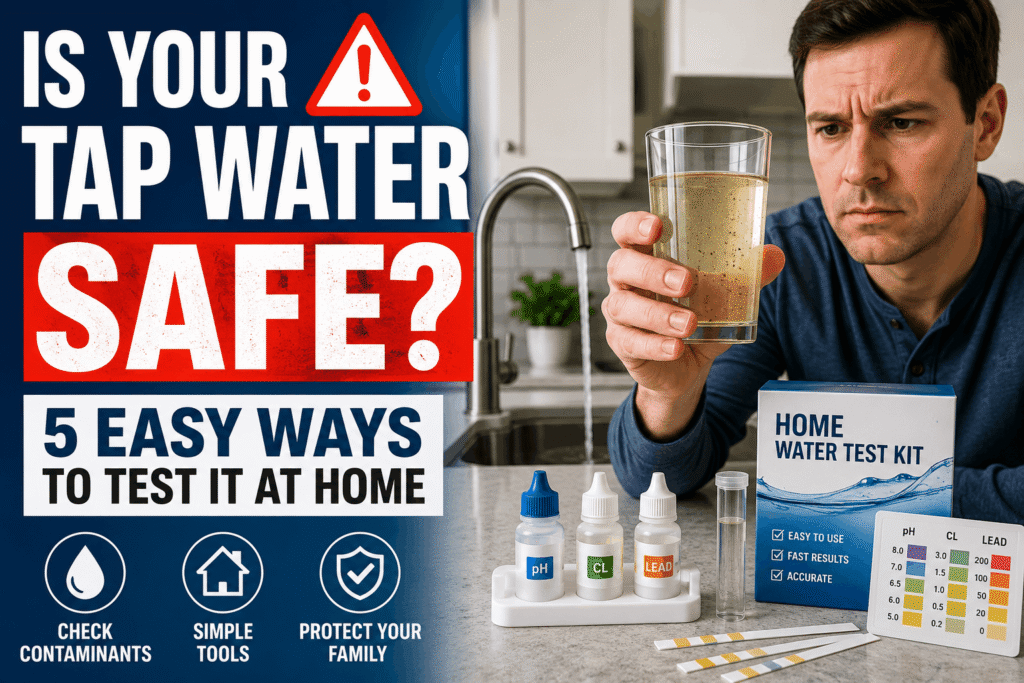
Like many homeowners, I always assumed the municipal water coming into my home was completely safe to drink. Since it looked clean and clear, I never thought there could be a problem.
One day, while filling a glass of water, I noticed a strange smell. At first, I thought it was coming from the sink or the glass, but after checking again, I realized the odor was actually coming from the water. That made me curious, so I decided to test my water quality.
The results were surprising. The water wasn’t as clean as I had assumed, and that experience made me realize that clear water isn’t always safe water. Poor water quality can affect both your health and your home’s plumbing without showing obvious signs.
If you’ve never tested your home’s water, this guide will show you exactly how to check water quality at home and what steps you can take to keep your drinking water safe.
Why Water Quality Matters
Poor water quality can affect more than just drinking water. It can also impact cooking, bathing, laundry, appliances, and your home’s plumbing system.
Testing your water can help identify:
- Harmful bacteria
- Heavy metals
- Chemical contaminants
- Hard water minerals
- Excess chlorine
- High nitrate levels
- Corrosion issues
Finding these problems early allows homeowners to take corrective action before they become expensive or dangerous.
Signs Your Water May Have Quality Issues
While some contaminants require laboratory testing, others produce noticeable warning signs.
1. Strange Taste
Water that tastes metallic, salty, bitter, or unusually sweet may indicate dissolved minerals or metals.
2. Unpleasant Odor
Common odors include:
- Rotten egg smell (hydrogen sulfide)
- Chlorine smell
- Musty odor
Persistent odors should not be ignored.
3. Cloudy Water
Cloudy or milky water can result from:
- Tiny air bubbles
- Sediment
- High mineral content
If cloudiness does not disappear after several minutes, testing is recommended.
4. Brown or Yellow Water
Discolored water may indicate:
- Rust from old plumbing
- Iron contamination
- Disturbed municipal water lines
5. White Mineral Buildup
White deposits on faucets, shower heads, or dishes often indicate hard water caused by high calcium and magnesium levels.
Ways to Check Water Quality at Home
There are several reliable methods available.
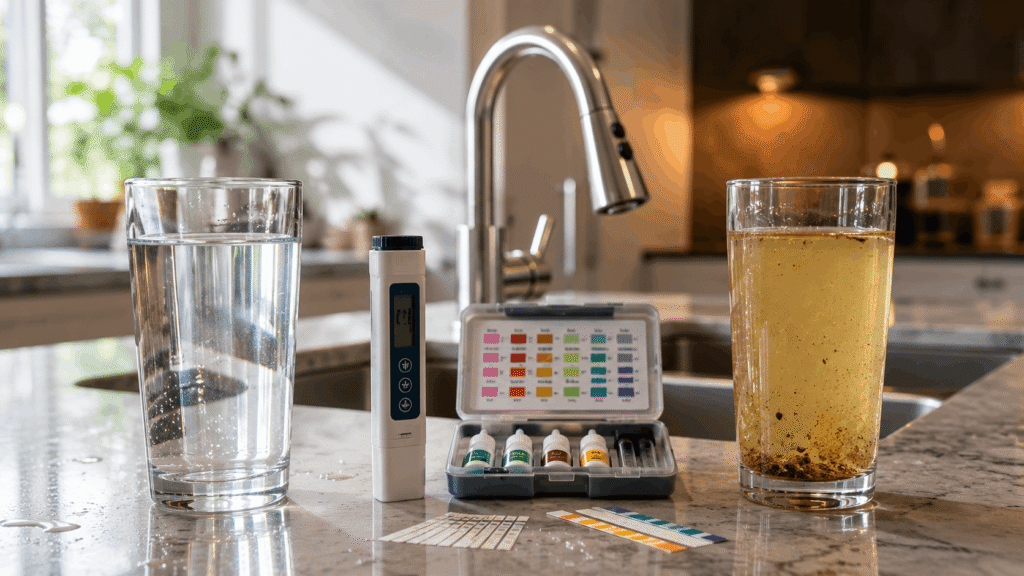
1. Use a Home Water Test Kit
Home testing kits are one of the easiest ways to evaluate drinking water.
Most kits can measure:
- pH
- Hardness
- Chlorine
- Iron
- Copper
- Lead
- Nitrate
- Nitrite
Many kits use color-changing test strips, while others include digital meters for more precise readings.
Home test kits provide quick results and are suitable for routine monitoring.
2. Test Total Dissolved Solids (TDS)
A TDS meter measures the amount of dissolved minerals and salts in water.
Typical TDS ranges:
| TDS Level | Water Quality |
|---|---|
| 0–50 ppm | Very low mineral content |
| 50–150 ppm | Excellent |
| 150–300 ppm | Good |
| 300–500 ppm | Acceptable |
| Above 500 ppm | Further testing recommended |
A high TDS reading does not necessarily mean the water is unsafe, but it may indicate excess minerals or other dissolved substances.
3. Laboratory Water Testing
For the most accurate results, homeowners can send a water sample to a certified laboratory.
Professional testing can identify contaminants that home kits cannot accurately measure, including:
- Lead
- Arsenic
- PFAS (“forever chemicals”)
- Pesticides
- Bacteria
- Radon
- Industrial chemicals
Laboratory analysis is recommended when buying a home, after flooding, or if household members experience unexplained health concerns.
What Should You Test For?
Different homes require different testing depending on their water source.
Lead
Older homes built before the late 1980s may contain plumbing components that contribute to lead contamination.
High lead levels can pose serious health risks, especially for infants and young children.
Bacteria
Private wells should be tested for bacteria such as E. coli.
Bacterial contamination often occurs after:
- Heavy rainfall
- Flooding
- Well repairs
- Septic system failures
Nitrates
Homes with private wells near agricultural areas should regularly test for nitrate contamination.
High nitrate levels are especially dangerous for infants.
Hardness
Hard water causes:
- Soap residue
- Scale buildup
- Appliance damage
- Reduced water heater efficiency
Although hard water is generally not considered a health risk, it can increase maintenance costs.
Chlorine
Municipal water systems commonly use chlorine for disinfection.
Excess chlorine may affect taste and odor but usually remains within regulated safety limits.
Iron and Manganese
High concentrations may cause:
- Rust-colored stains
- Metallic taste
- Laundry discoloration
pH
Water with very low or very high pH can corrode plumbing or cause mineral buildup.
A pH between 6.5 and 8.5 is generally considered acceptable for drinking water.
Municipal Water vs. Private Well
Municipal Water
If your home receives city water:
- Water is treated before distribution.
- Annual water quality reports are typically available.
- Homeowners may still wish to test for lead if the home has older plumbing.
Private Well
Well owners are responsible for monitoring their own water quality.
Private wells should be tested more frequently because they are not regulated in the same way as public water systems.
How Often Should You Test Your Water?
Municipal Water
Test every 1–2 years, or sooner if:
- Water changes color
- Taste changes
- Odor develops
- Plumbing repairs occur
Private Well
Annual testing is recommended.
Additional testing should be performed after:
- Flooding
- Major storms
- Well repairs
- Septic system problems
- Nearby construction
How to Collect a Water Sample Properly
Accurate testing begins with proper sample collection.
Follow these steps:
- Wash your hands.
- Use a clean testing container.
- Allow cold water to run for several minutes.
- Avoid touching the inside of the container.
- Seal the sample immediately.
- Deliver laboratory samples as instructed.
Improper sampling can produce inaccurate results.
What to Do if Your Water Test Shows Problems
The solution depends on the contaminant identified.
Possible treatment options include:
| Problem | Possible Solution |
|---|---|
| Hard water | Install a water softener |
| Sediment | Sediment filtration system |
| Chlorine | Activated carbon filter |
| Lead | Certified lead-removal filtration system |
| Bacteria | Well disinfection and follow-up testing |
| High iron | Iron filtration system |
| High nitrates | Reverse osmosis treatment |
Retesting after treatment helps confirm that the issue has been resolved.
Tips to Keep Your Drinking Water Safe
- Replace water filters according to the manufacturer’s schedule.
- Flush faucets after long periods of inactivity.
- Inspect plumbing for leaks or corrosion.
- Test private wells every year.
- Keep chemicals and fuel away from wellheads.
- Clean faucet aerators regularly.
- Address unusual taste, odor, or discoloration promptly.
FAQ
Q1. Can I test my water without a professional?
Ans. Yes. Home water testing kits provide a convenient way to monitor common contaminants. However, laboratory testing offers more comprehensive and accurate results.
Q2. Is clear water always safe?
Ans. No. Many harmful contaminants are invisible and have no noticeable taste or odor.
Q3. Should city water still be tested?
Ans. Yes. Although municipal water is treated, testing may be beneficial if your home has older plumbing or if you notice changes in water quality.
Q4. How much does professional water testing cost?
Ans. Costs vary depending on the number of contaminants tested, but comprehensive laboratory testing is generally more expensive than home test kits while providing significantly more detailed results.
Final Thoughts
Knowing how to check water quality at home is an important part of responsible home maintenance. Routine testing can identify contaminants before they become serious problems, protect your family’s health, and help extend the life of your plumbing and appliances.
Whether you rely on a municipal water supply or a private well, combining regular inspections with appropriate water testing provides confidence that the water flowing through your home is clean, safe, and suitable for everyday use.
Recent Articles
Top 10 Best Floor Cleaning Liquids in USA (Safe & Effective Guide)
How to Fix a Leaking Faucet (Easy DIY Guide for Beginners)
Stop Damaging Your Floors! Clean Hardwood Floors the Right Way
How to Unclog a Sink Fast Without Chemicals (Works in Minutes!)
Why Your Refrigerator Is Not Cooling Properly (Simple Home Fix Guide)
Tired of Borrowing Tools? 8 Essential Tools Every Home Should Have
No Hot Water? 7 Easy Fixes for Your Water Heater (Before You Call a Plumber)
Toilet Keeps Running? Fix It in 5 Minutes (Save Your Water Bill)
How to Remove Snow From Your Driveway & Sidewalk (Easy & Safe Methods)