
All the rooms and the main hall in my house have ceiling fans, and most of them are pretty old. Even though the fans still run at good speed, one problem started becoming very frustrating recently.
My bedroom ceiling fan would start making noise at night. I even had it checked once or twice, and the noise disappeared for some time. However, after a few weeks, the same sound would come back again.
Replacing a ceiling fan every time is not practical, especially when the fan still works properly otherwise. On top of that, the noise made it difficult to sleep comfortably at night.
At first, I thought the motor was completely damaged. However, after researching the issue, I realized many ceiling fan noises are caused by simple problems homeowners can fix themselves.
If your ceiling fan also becomes noisy at night, here are the most common reasons and easy fixes you should check first.
Why Ceiling Fans Become Noisy at Night
Ceiling fans often sound louder at night because:
- The house becomes quieter
- Temperature changes affect metal parts
- Loose components vibrate more noticeably
- Dust buildup affects balance
Additionally, older ceiling fans naturally develop small loose parts over time.
1. Loose Fan Screws
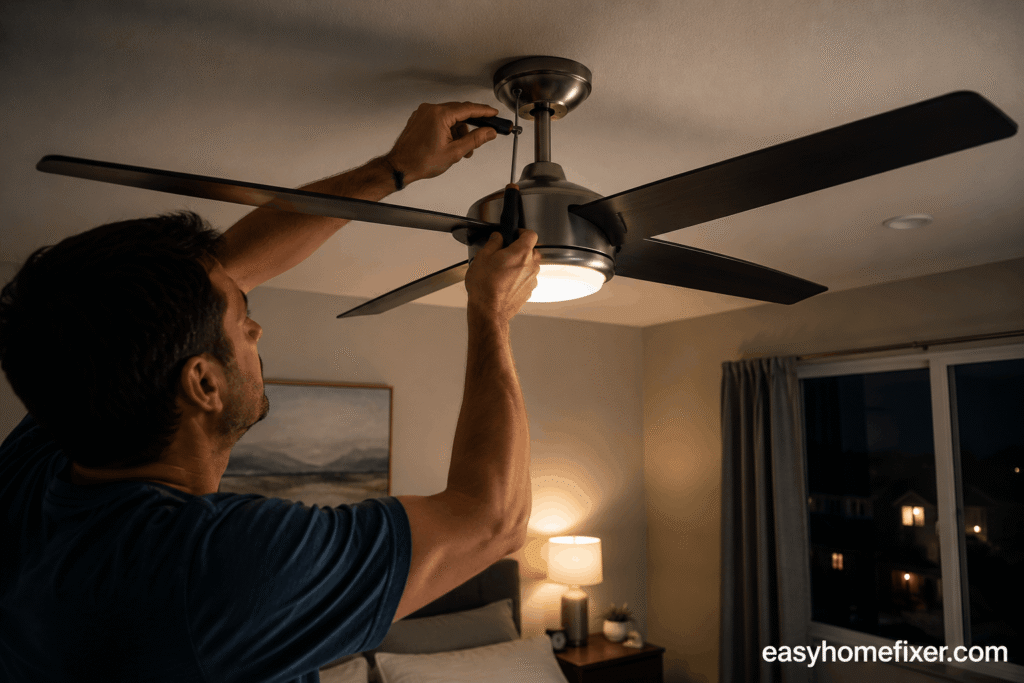
One of the most common causes of ceiling fan noise is loose screws.
Over time, fan movement slowly loosens:
- Blade screws
- Motor housing screws
- Mounting brackets
Signs include:
- Clicking sounds
- Rattling noise
- Fan vibration
Therefore, tightening all screws carefully can often solve the issue quickly.
2. Dust Buildup on Fan Blades
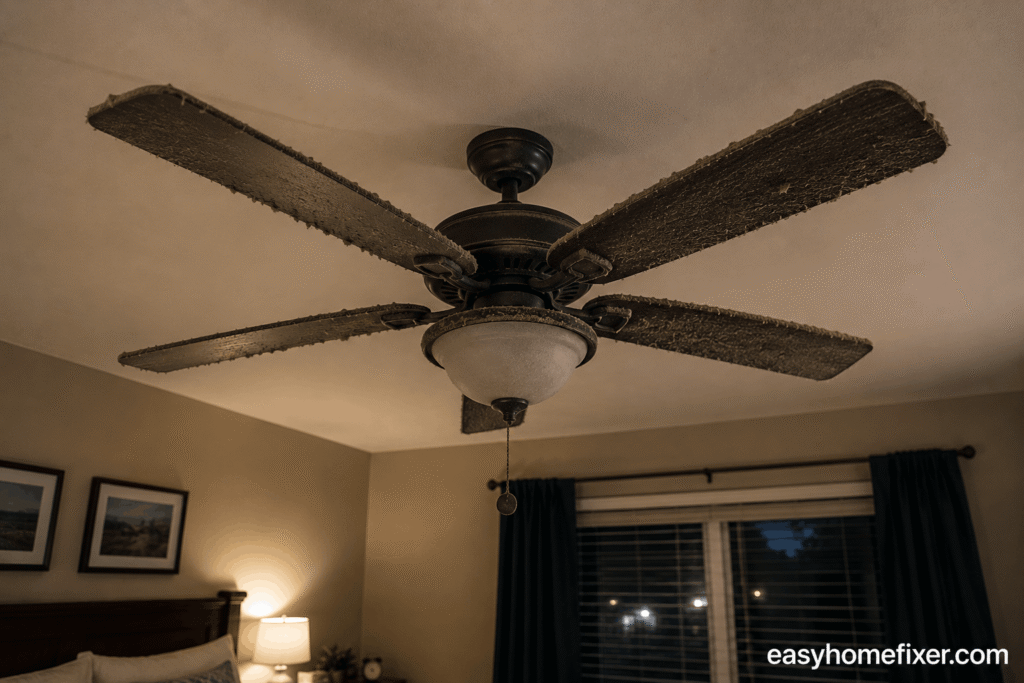
Dust buildup changes blade balance over time.
As a result, the fan may start wobbling slightly and create noise.
Signs include:
- Uneven spinning
- Wobbling fan
- Humming or shaking sounds
Therefore, cleaning fan blades regularly helps reduce both noise and dust problems.
3. Loose Light Fixture or Glass Cover
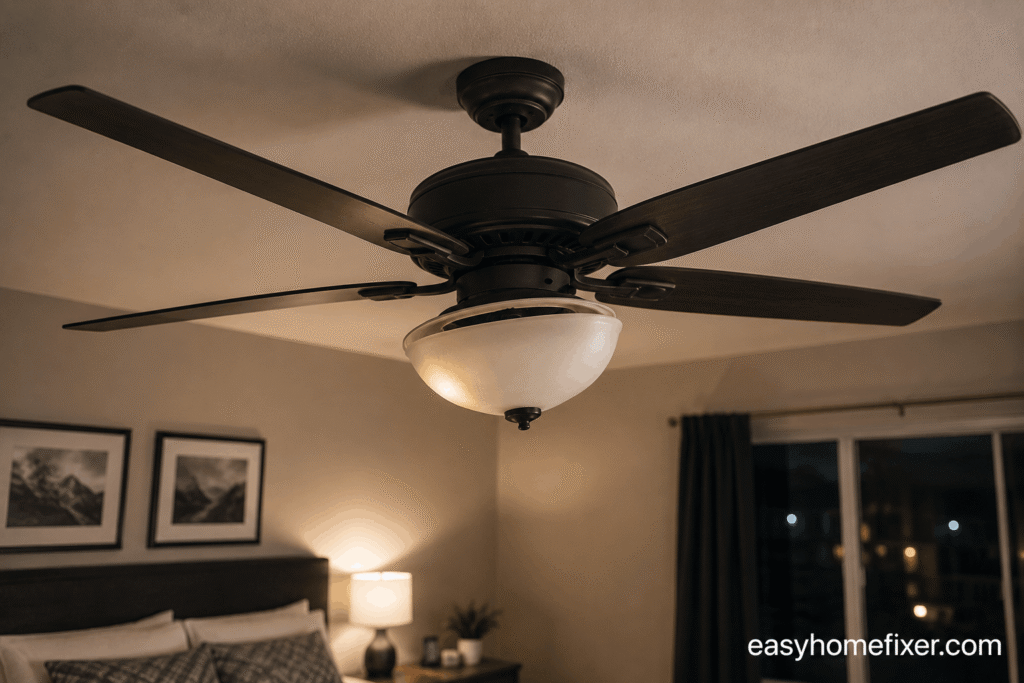
Sometimes the fan itself is not the real problem.
Instead, the noise may come from:
- Loose glass covers
- Light fixtures
- Decorative parts
These parts vibrate while the fan spins.
As a result, the sound becomes more noticeable during quiet nighttime hours.
4. Unbalanced Fan Blades
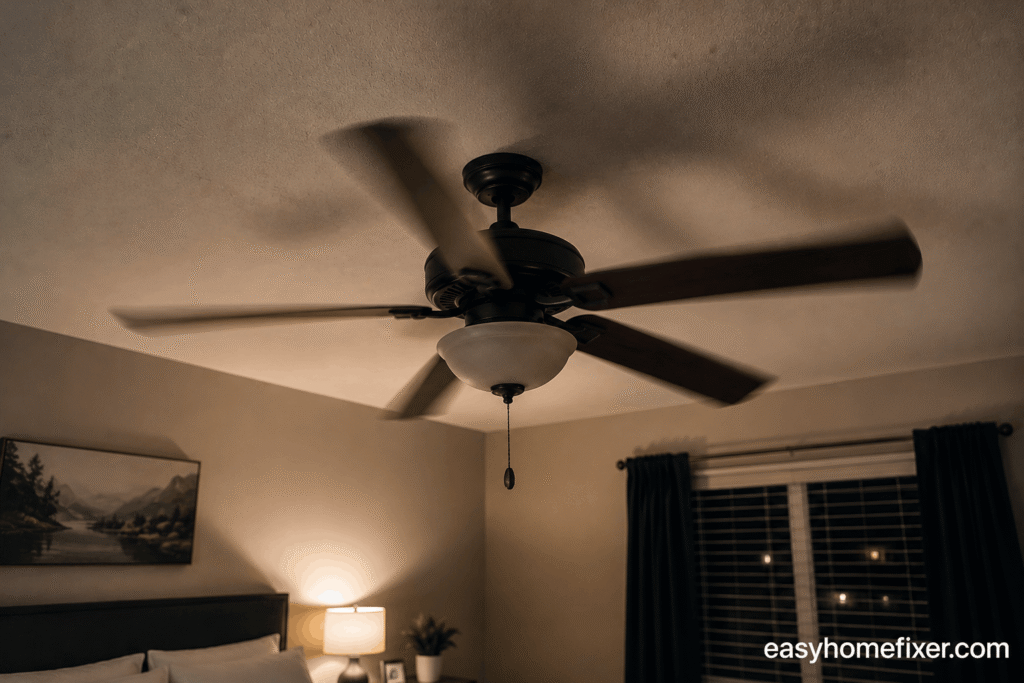
Fan blades can become unbalanced because of:
- Dust buildup
- Slight bending
- Loose screws
- Aging parts
Signs include:
- Fan shaking
- Rhythmic clicking noise
- Visible wobbling
Fortunately, ceiling fan balancing kits are inexpensive and easy to use.
5. Worn Motor Bearings
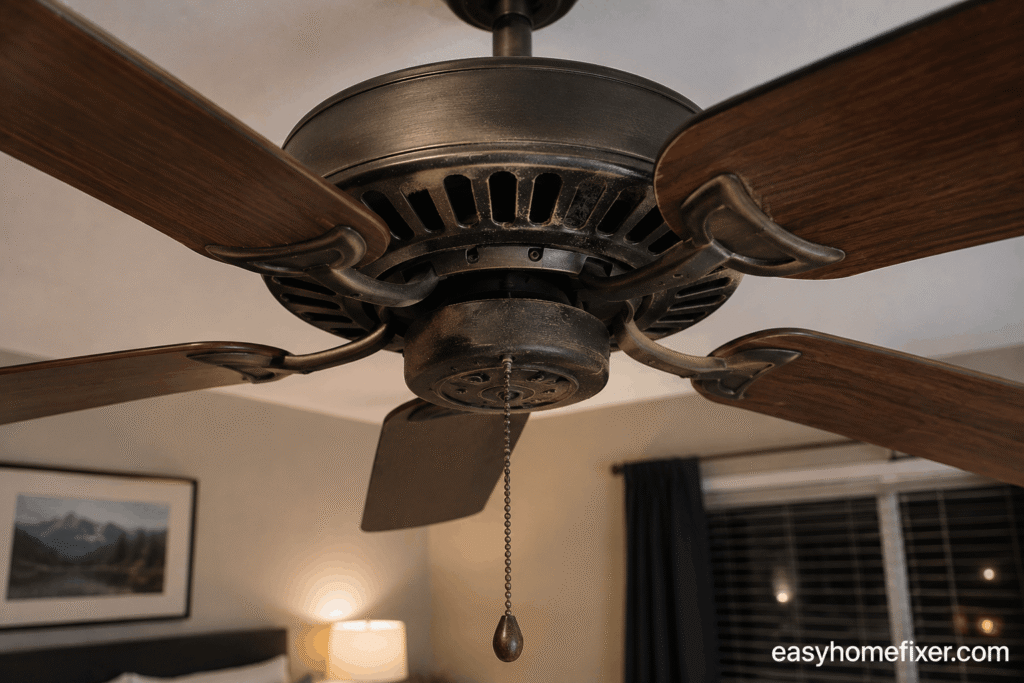
Older ceiling fans may eventually develop worn motor bearings.
Signs include:
- Grinding noise
- Constant humming
- Noise at all speed levels
Unfortunately, severe motor wear may eventually require fan replacement.
However, many fans continue working for years with only small maintenance fixes.
6. Temperature Changes at Night
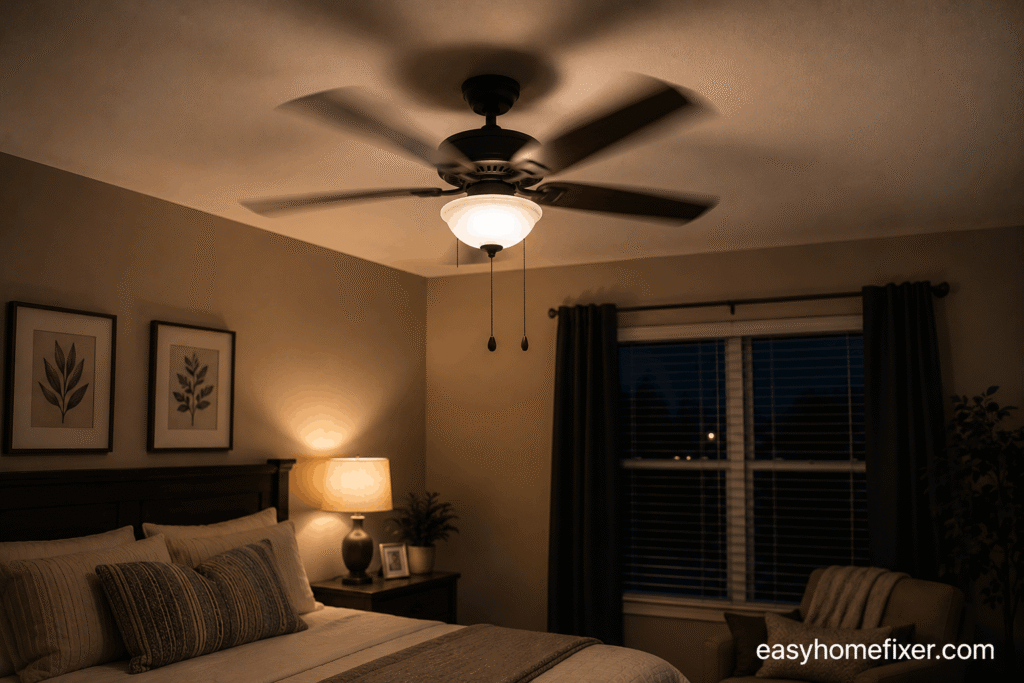
At night, temperatures naturally drop.
As a result, metal parts inside the fan slightly expand or contract.
Older ceiling fans especially may start making:
- Ticking sounds
- Clicking noises
- Light vibration sounds
This issue becomes more common in older homes.
Easy Ways to Reduce Ceiling Fan Noise

Simple maintenance steps that help:
- Tighten loose screws
- Clean fan blades regularly
- Check light fixtures
- Balance fan blades
- Inspect mounting brackets
Small fixes often make a noticeable difference.
Helpful Products That May Help
- Ceiling fan balancing kit
- Screwdriver set
- Microfiber duster
- Small ladder
- Fan cleaning tools
How Much Can Ceiling Fan Repairs Cost in the U.S.?
Average costs:
- Ceiling fan inspection: $75 – $200
- Ceiling fan repair: $100 – $300
- New ceiling fan installation: $150 – $500+
Because of these costs, I first started checking simple maintenance problems myself before replacing the fan completely.
Final Thoughts
From my experience, ceiling fan noise at night can become very frustrating, especially when it affects sleep every day.
Thankfully, many ceiling fan noises are caused by simple issues like loose screws, dust buildup, or unbalanced blades.
Once I started checking these small problems regularly, the fan noise became much easier to control without spending money on frequent repairs.
So, if your ceiling fan makes noise at night, start with these simple checks before purchasing a new fan.
FAQs
Q1. Why does my ceiling fan sound louder at night?
Ans: Because nighttime is quieter, and temperature changes can make loose parts vibrate more noticeably.
Q2. Can dust make a ceiling fan noisy?
Ans: Yes. Dust buildup can affect blade balance and create wobbling or humming sounds.
Q3. Is ceiling fan wobbling dangerous?
Ans: Small wobbling is common, but severe wobbling should be fixed quickly to avoid damage.
Q4. Should I replace a noisy ceiling fan immediately?
Ans: Not always. Many ceiling fan noises are caused by simple maintenance issues that are easy to fix.