Since my house is older, door problems have always been pretty common. Over the years, I’ve dealt with doors that would not close properly, latches that stopped lining up, and handles that became loose.
I even replaced one or two doors completely, thinking the old doors were the main problem. But after some time, the same issues slowly started coming back again.
After spending a lot of money on repairs and replacements, I finally decided to start checking and fixing small door problems myself first.
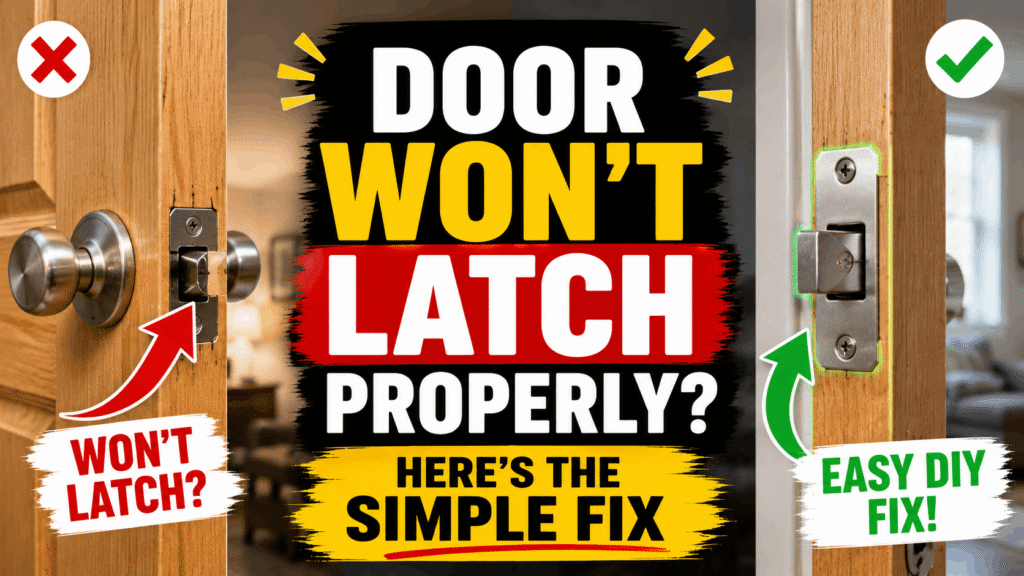
One issue that became especially frustrating was a door that would not latch properly anymore.
Sometimes I had to push the door hard just to close it, and other times the latch completely missed the strike plate.
Surprisingly, once I understood the real causes, the fix turned out to be much simpler than I expected.
If your door won’t latch properly, here are the most common causes and easy fixes you should check before spending money on repairs.
Why a Door May Stop Latching Properly
Doors naturally shift over time, especially in older homes.
Common reasons include:
- Loose hinges
- Humidity changes
- House settling
- Worn latch hardware
- Misaligned strike plates
Even a small movement can prevent the latch from lining up correctly.
1. Loose Door Hinges
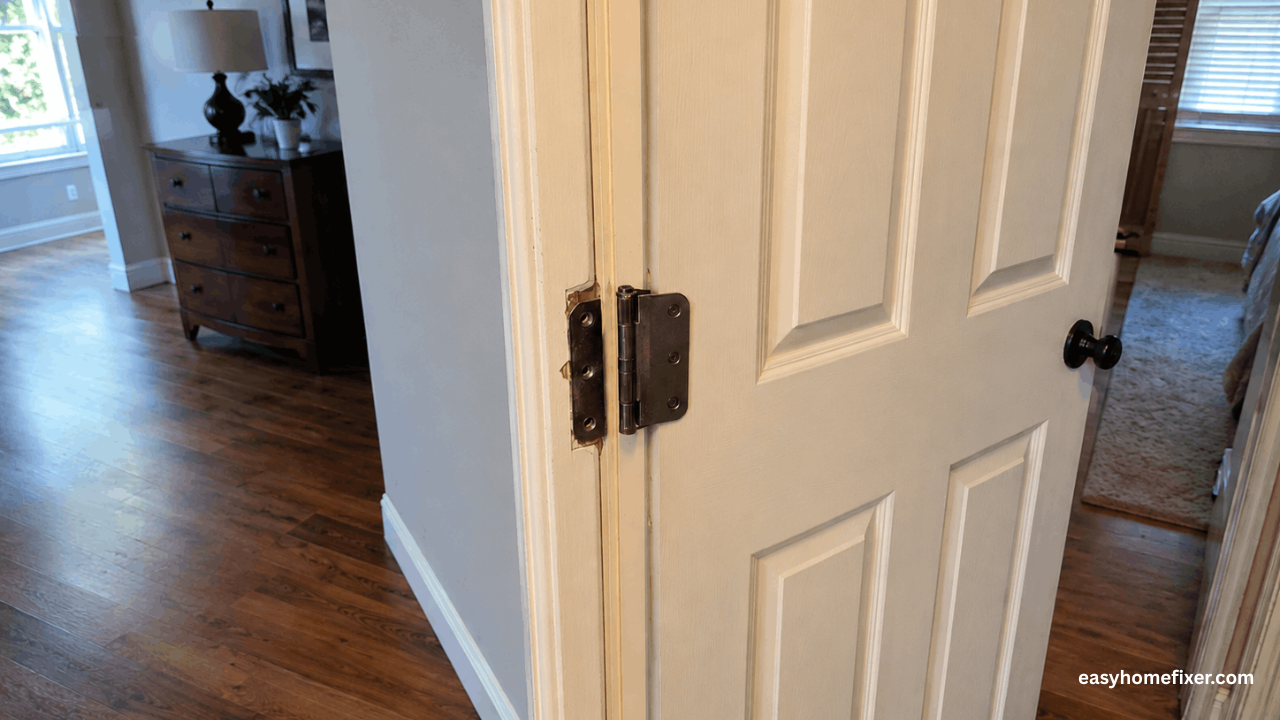
Loose hinges are one of the most common causes of latch problems.
Over time, screws slowly loosen from years of daily use.
Signs:
- Door sags slightly
- Door rubs against the frame
- Latch misses the strike plate
Easy Fix:
- Tighten all hinge screws
- Replace stripped screws if necessary
I was surprised how much difference a few tightened screws made.
2. Misaligned Strike Plate
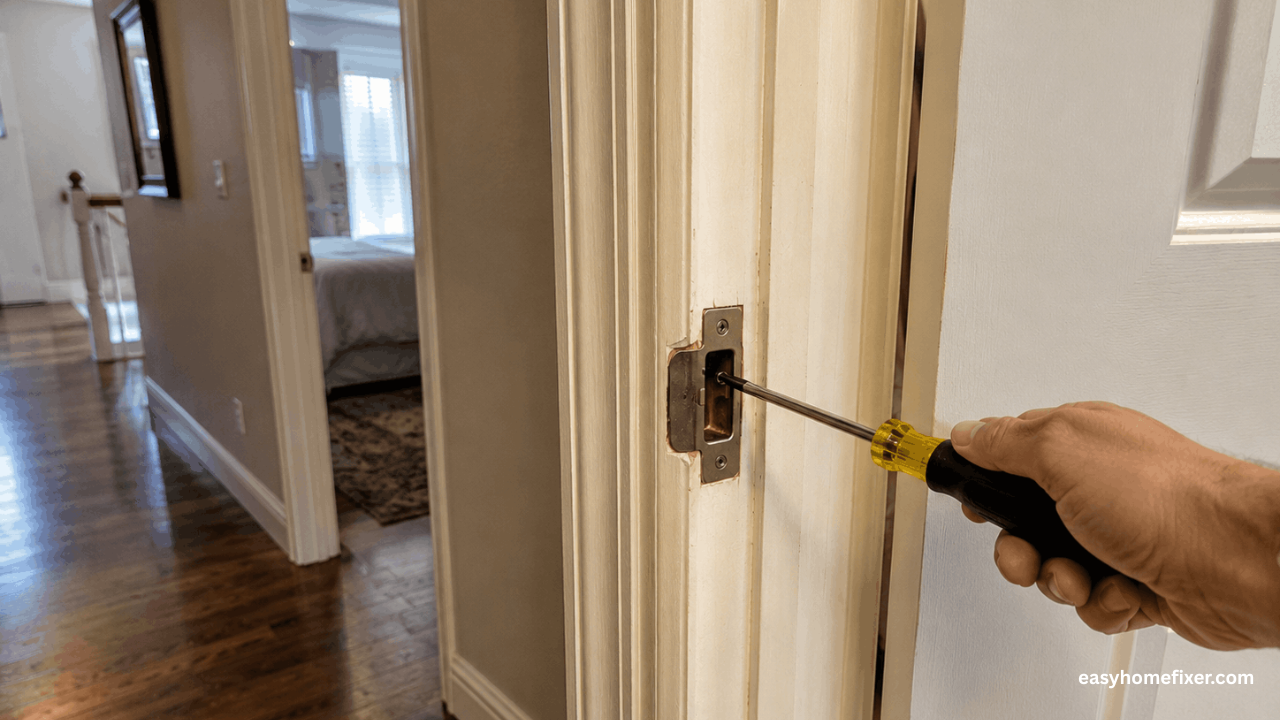
The strike plate is the metal plate attached to the door frame where the latch locks into place.
If the door shifts even slightly, the latch may stop lining up correctly.
Signs:
- Door almost closes but will not click shut
- Latch hits above or below the strike plate
Easy Fix:
- Loosen the strike plate screws
- Adjust the position slightly
- Tighten the screws again
Sometimes only a very small adjustment solves the issue completely.
3. Swollen Wooden Door From Humidity
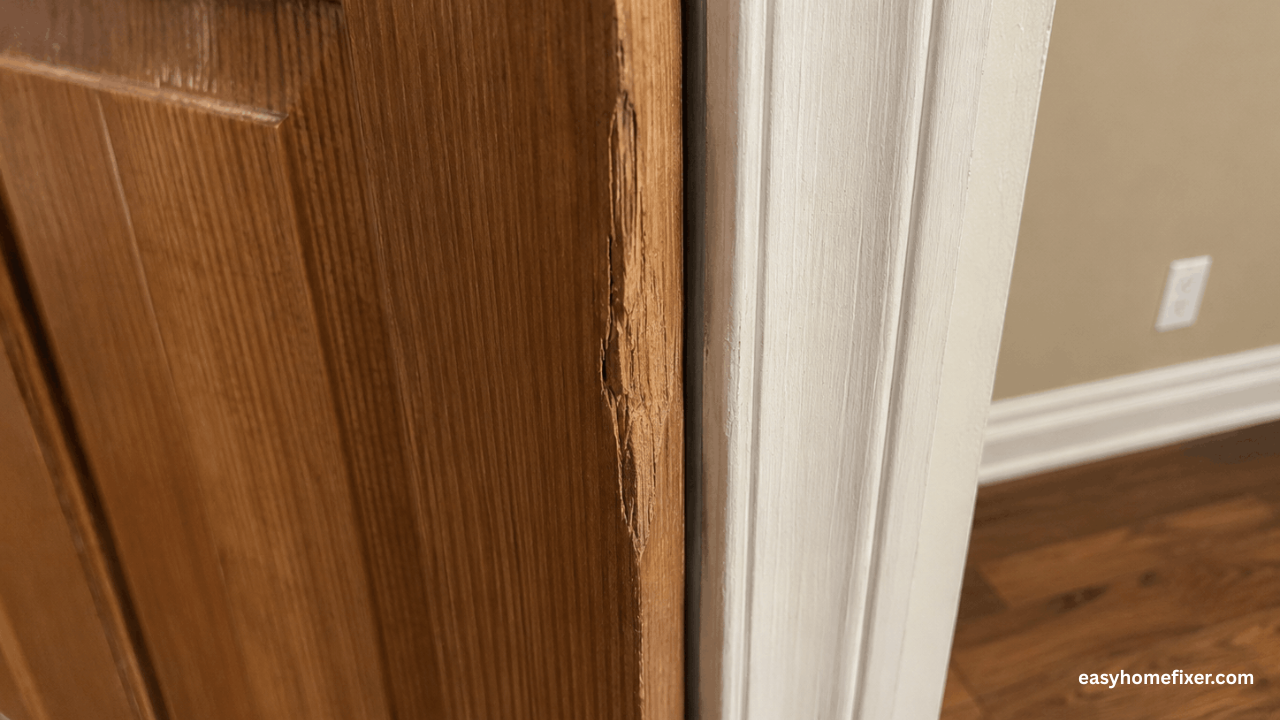
Humidity and seasonal weather changes can cause wooden doors to expand slightly.
This is especially common during summer or rainy weather.
Signs:
- Door sticks while closing
- Hard to push shut
- Door rubs against the frame
Easy Fix:
- Reduce indoor humidity if possible
- Lightly sand the rubbing area if necessary
Older wooden doors are especially sensitive to moisture changes.
4. Dirt Inside the Latch Mechanism
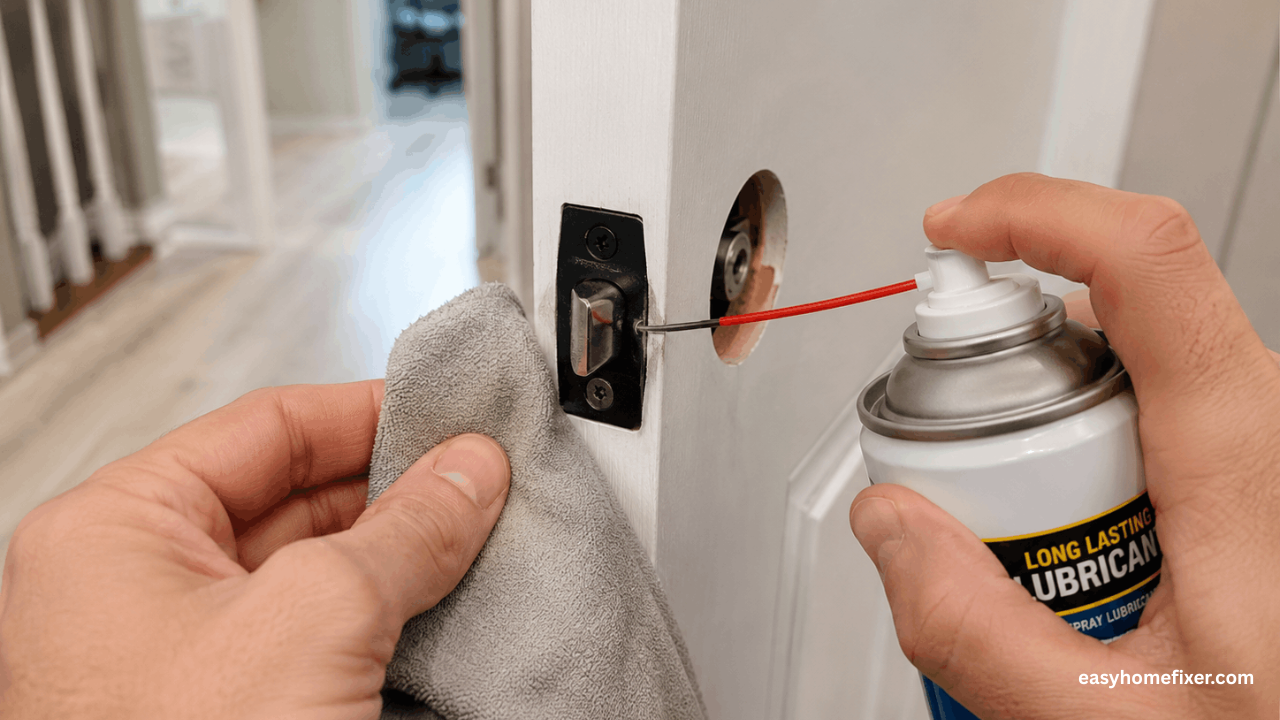
Dust and dirt buildup inside the latch can prevent smooth movement.
Signs:
- Latch feels sticky
- Door handle feels stiff
- Latch does not fully extend
Easy Fix:
- Clean the latch carefully
- Apply lubricant spray lightly
- Test the latch several times
Sometimes the issue is simply years of dirt buildup inside the mechanism.
5. House Settling Causing Frame Shift
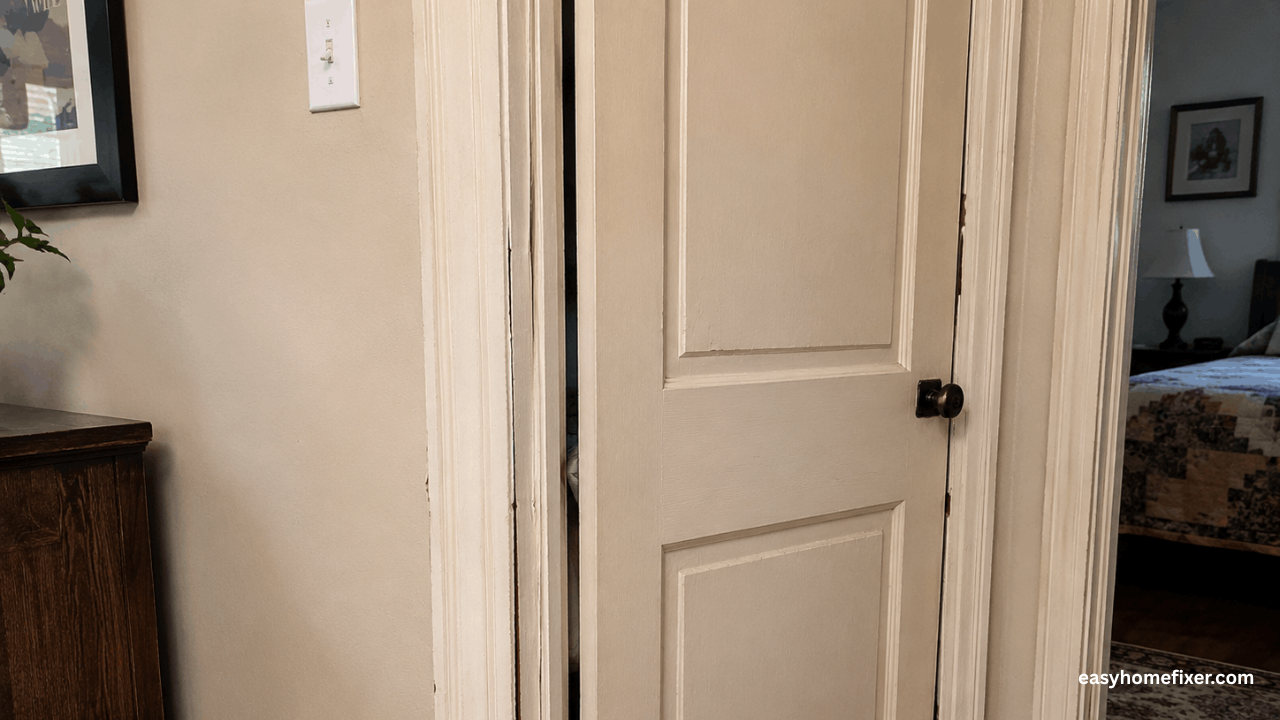
In older homes, natural settling can slowly shift door frames over time.
Even a small frame movement can affect latch alignment.
Signs:
- Multiple doors sticking in the house
- Uneven gaps around the door
- Small cracks near door frames
This is a very common issue in older U.S. homes.
6. Bent or Damaged Door Latch
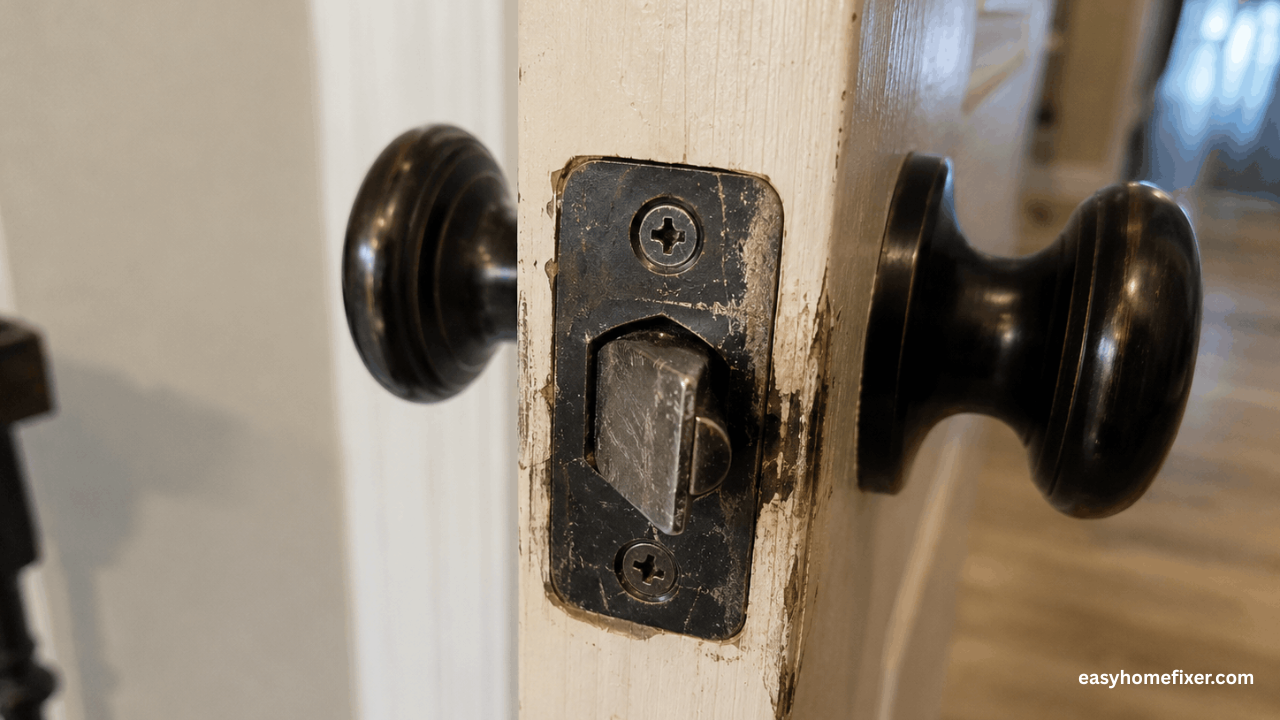
Sometimes the latch itself becomes worn out or slightly bent.
Signs:
- Latch feels loose
- Door opens easily after closing
- Latch does not extend fully
Easy Fix:
Replacing the latch is usually inexpensive and fairly simple.
Warning Signs You Should Not Ignore
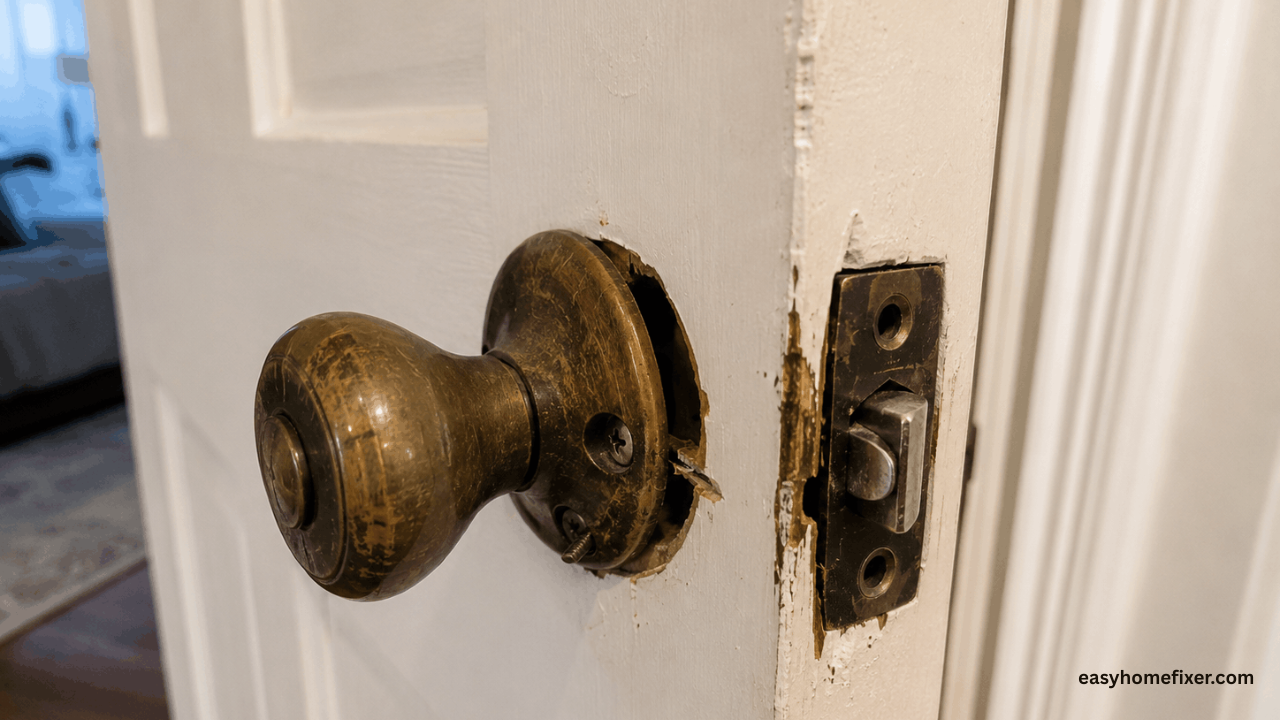
You should inspect the door immediately if:
- Door suddenly stops closing completely
- Lock feels loose
- Wood around hinges starts cracking
- Screws keep falling out
Ignoring these issues may eventually damage the door frame itself.
Helpful Tools That Make Repairs Easier
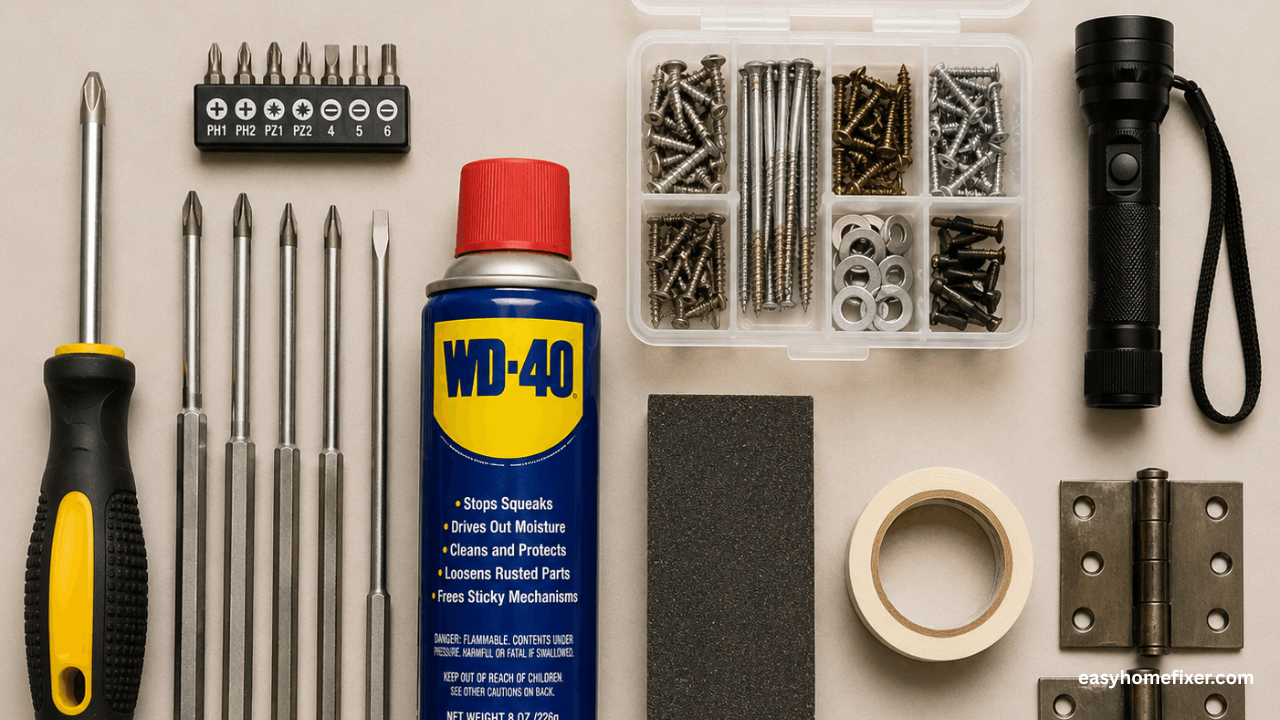
Helpful tools:
- Screwdriver set
- Lubricant spray
- Replacement screws
- Sanding block
- Flashlight
How Much Does Door Repair Cost in the U.S.?
Average repair costs:
- Handyman visit: $80 – $250
- Door latch replacement: $15 – $50
- Door frame repair: $150 – $500+
That’s one reason I started checking these small issues myself before paying for expensive repairs.
Final Thoughts
From my experience, a door that won’t latch properly can become frustrating very quickly, especially when you deal with it every day.
The good news is that most latch problems are caused by simple alignment issues, loose hinges, or minor hardware problems.
Once I started checking these things myself, I realized many door problems are easier and cheaper to fix than they first appear.
If your door won’t latch properly, start with these simple fixes before spending money on expensive repairs.
FAQs
Q1. Why does my door not latch anymore?
Ans: Usually because of loose hinges, misaligned strike plates, humidity expansion, or worn latch hardware.
Q2. Can humidity affect doors?
Ans: Yes, wooden doors often expand during humid weather and may stop closing properly.
Q3. Is a loose hinge enough to stop a door from latching?
Ans: Yes, even small hinge movement can affect latch alignment.
Q4. Should I replace the whole door?
Ans: Not usually. Most latch problems can be fixed without replacing the entire door.